


Google has been testing something that should make every business pay attention, especially businesses like law firms that rely on local search visibility.
It’s a feature in Google called “Ask for me.” Instead of the user calling a business to inquire about things like appointments, availability, and pricing, Google does it for them.
The user tells it what they need, Google calls a few businesses, gathers the info, and sends the user a summary via text, email, or both.
It’s still early, still being tested, and Google is clearly experimenting with what kinds of calls this agent can handle and how businesses fit into the process.
The rollout has been gradual: first auto shops and nail salons, then services like pet grooming and dry cleaning. Now the feature is expanding into shopping, letting users ask Google to call local stores about toys, electronics, and health-and-beauty products.
The more Google tests this, the more obvious the trajectory becomes.
How Google’s “Ask for Me” Works
Here’s what it looks like when you search for something like “mechanic near me.”

Note the option under the map preview labeled “Have AI check prices.” If you tap it, Google will walk you through a few quick questions, including:
- Type of service required
- Vehicle year, make, and model
- Engine size (you can select “I don’t know”)
- When you need the service
- Location where you need the service
Here’s what some of those options look like on mobile:
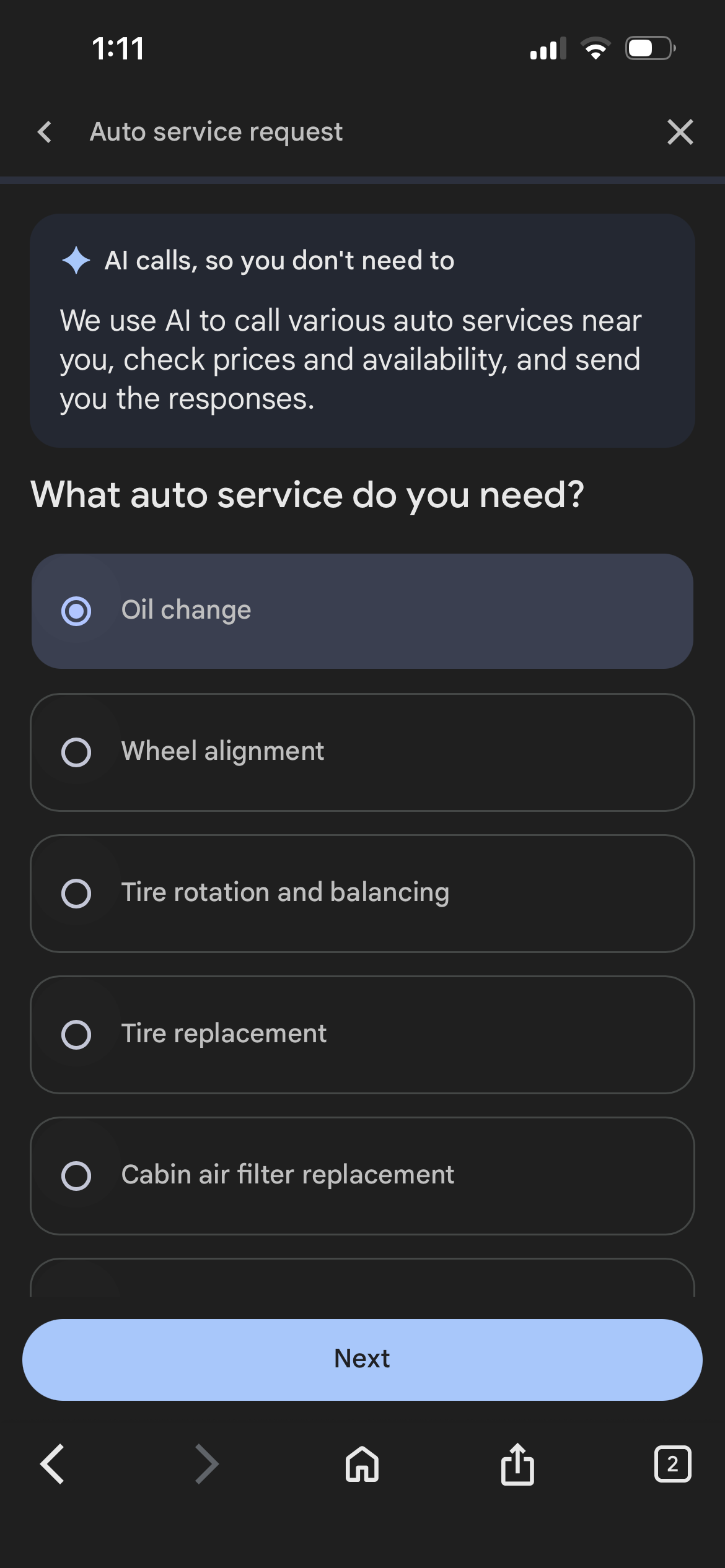
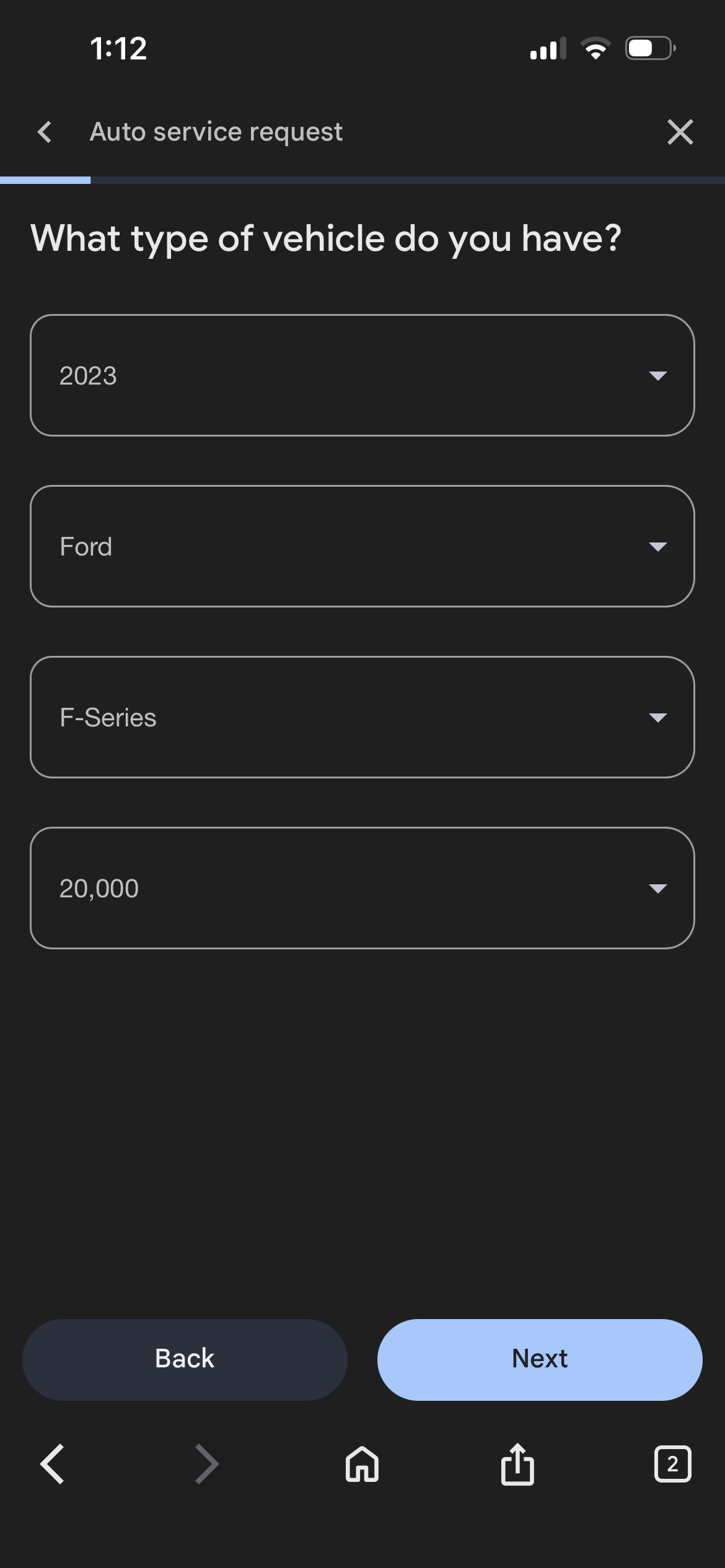
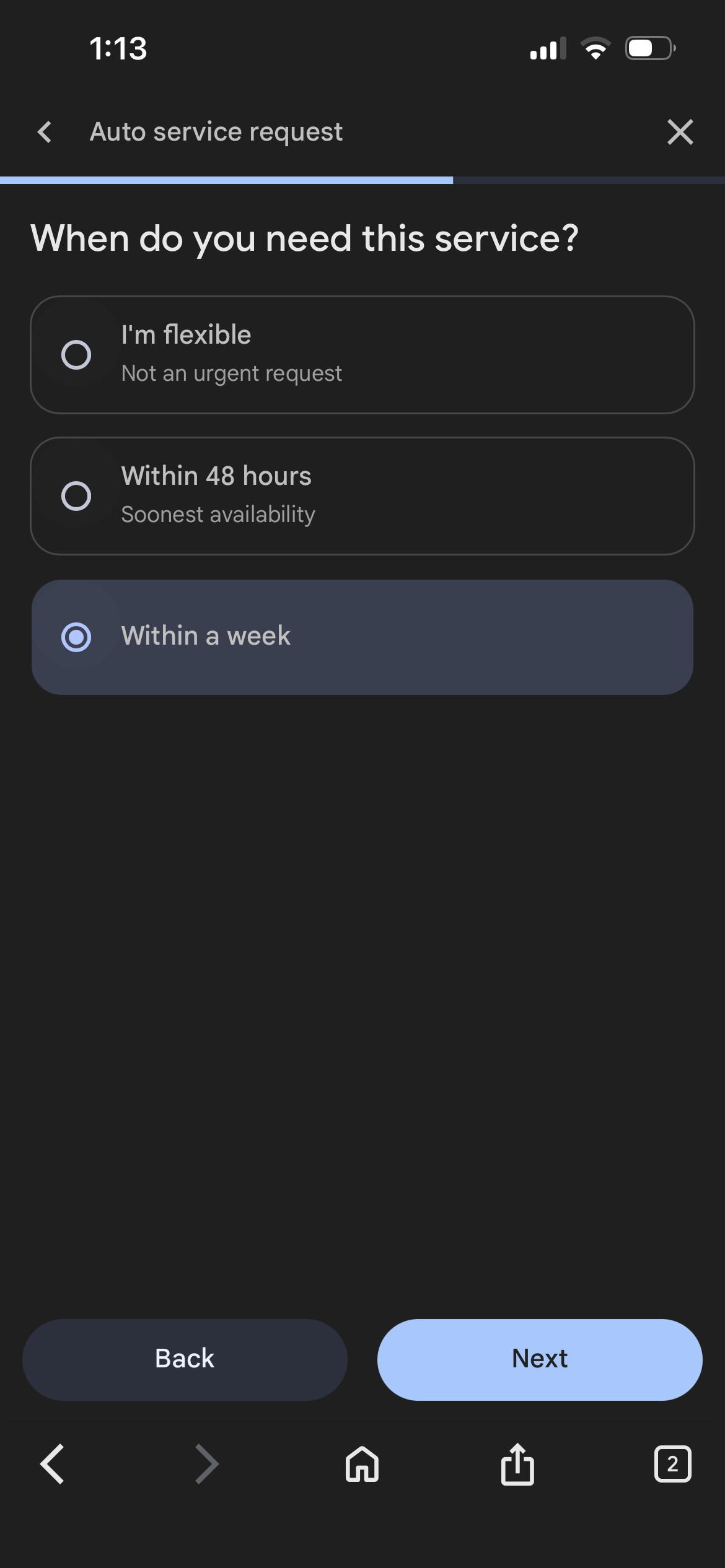
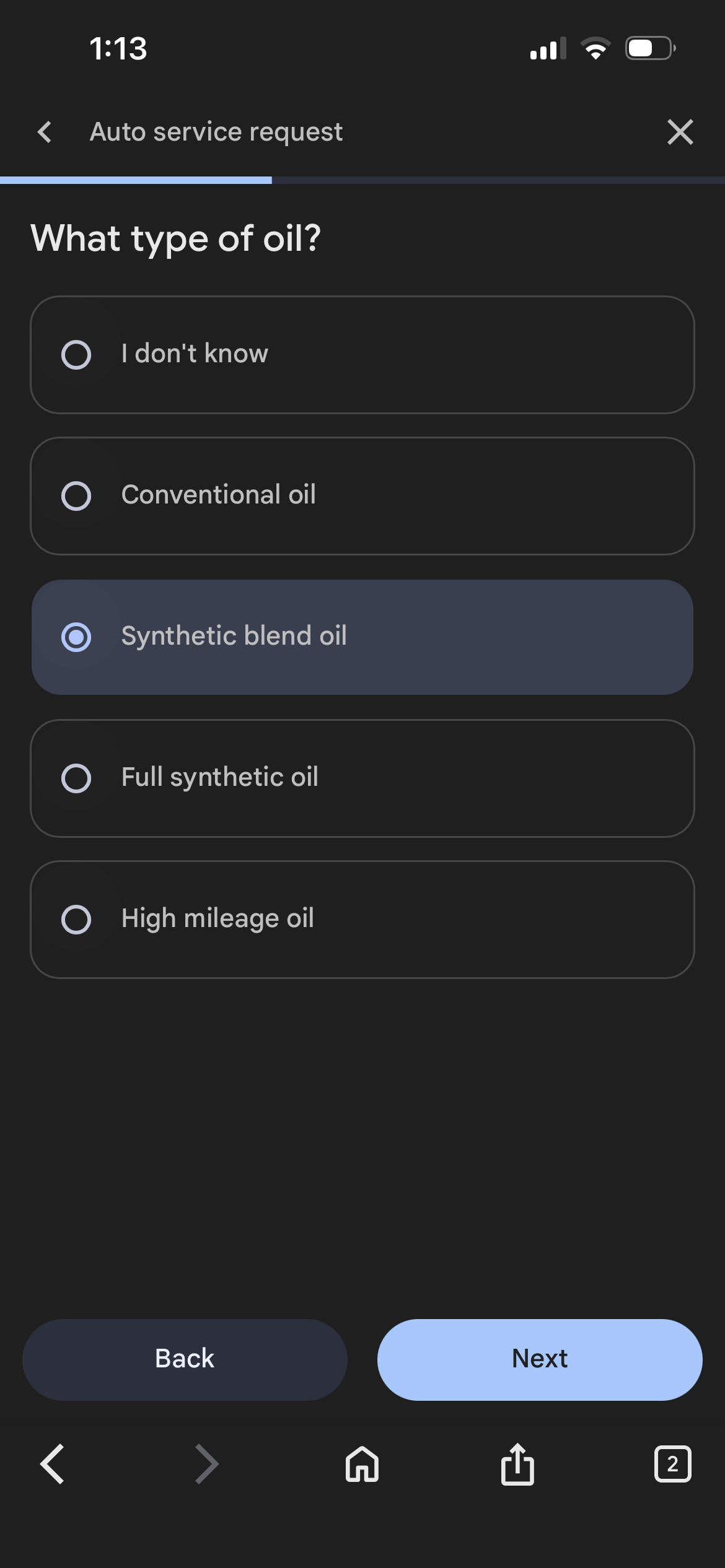
Once you enter your details, Google will reach out to businesses in the desired area. It collects pricing, availability, and other information, and then sends you a summary so you can choose the right place.
Here’s what it looks like when Google sends a summary via text message of shops that can accommodate an oil change in the desired location:

Up to now, most examples of AI agents have been things like making dinner reservations or buying event tickets. That’s helpful, but not exactly everyday needs for most people.
As Google expands its AI calling capabilities into more types of businesses and more everyday tasks, users will get used to seeing the option in their Google Map results when they search for local businesses. They may even get used to the idea that they can tap a button and Google will handle calling around for them.
And once people get used to that convenience, they may start to expect it, whether they’re checking who has a product in stock, who has the next available appointment or the best price, or which local business best fits what they need.
‘Ask for Me’ Is Not Ready for Law Firms
Here’s what happens when you search for “car accident lawyer near me”?

Notice there’s no option to ask Google to call local firms. At least not yet.
But fast-forward a little bit, and picture a user telling Google:
- “I was in a car accident.”
- “It happened last Thursday.”
- “It was in Tampa.”
- “I’m having back pain.”
Google then calls a few law firms that match the criteria.
- Maybe it checks consultation availability.
- Maybe it gives firms a chance to screen the case.
- Maybe it even routes only strong fits back to the user.
This is all speculation at this point. Google and other AI-forward companies are experimenting with features such as this and studying how consumers and businesses might use agentic AI (or if they will in the first place).
It’s not unrealistic for law firms to imagine a future where this is reality.
Shore Up Local Search Basics
Before anyone calls your firm, whether it’s a person or one day Google’s AI, they have to decide which firm(s) to call at all. That starts with your local search presence. Google Business Profile (GBP) basics, reviews, hours, and other basics about your business.
If your local search presence is messy for humans, it’ll be messy for the robots too.
Google and users alike rely on whatever information they can find. Wrong hours, missing services, outdated reviews, or an abandoned GBP can influence how often you get surfaced in local search and whether a future AI agent even considers your firm in its outreach.
But showing up is only half the equation. The other half is what happens after the call.
Even with strong local SEO, your intake process needs to be solid.
Shore Up Your Intake
If Google called your law firm tomorrow, how well would your intake team handle it?
Many law firms are already struggling with intake for human callers.
- Missed calls
- Delayed (or absent) call backs
- Inconsistent screening
- Rushed conversations
- Prospective clients slipping through the cracks
If the human side of intake isn’t dialed in, adding AI callers to the mix just amplifies those problems.
Whether these features roll out to law firms next year or five years from now, many expect that AI agents will handle more and more of users’ first contacts with businesses.
Law firms that have the infrastructure in place now and that are ready for that shift could be at an advantage.
So ask yourself:
- Is your intake process consistent?
- Do you gather all the essential information every time?
- Does your team know how to treat every caller like a potential client, even if that caller is an AI voice?
Human or AI, the very first interaction is still your first impression.
If you need help with your local SEO efforts, give us a call, and we’ll audit your firm’s website for free.

Yvette Valencia is the Latina founder and CEO2 of We Do Web Content, a content marketing agency for law firms and one of Inc. 5000’s fastest-growing private businesses in America. She’s a 14-year content marketing veteran and Six Sigma-certified Green Belt credited with developing the proven (and repeatable) process for creating top-ranking website content at scale for attorneys.
